
People call me at every possible stage of foreclosure. Sometimes they’ve missed two payments and can see what’s coming. Sometimes there’s already an auction date on the calendar. Occasionally they don’t know a foreclosure is happening at all.
Where you are in that process determines what you can actually do about it. So let’s go through it honestly — including the options that don’t involve selling, and the situations where nothing works.
This is general information based on deals I’ve handled, not legal advice. Florida foreclosure has real deadlines and you should talk to a foreclosure attorney about your specific case.
How Long Does Foreclosure Take In Florida?
The single most common surprise is timing. People assume foreclosure is fast. In Florida it usually isn’t.
Florida is a judicial foreclosure state, which means the lender has to sue you in court. That takes time — months, and frequently longer than a year from the first missed payment to an actual auction. I’ve worked with sellers who’d missed two payments and sellers who’d missed two years of payments, and the second group often had more runway left than they expected.
That’s good news, but only if you use it. Time by itself doesn’t fix anything.
Stopping a Foreclosure Early: A Brandon Case Study
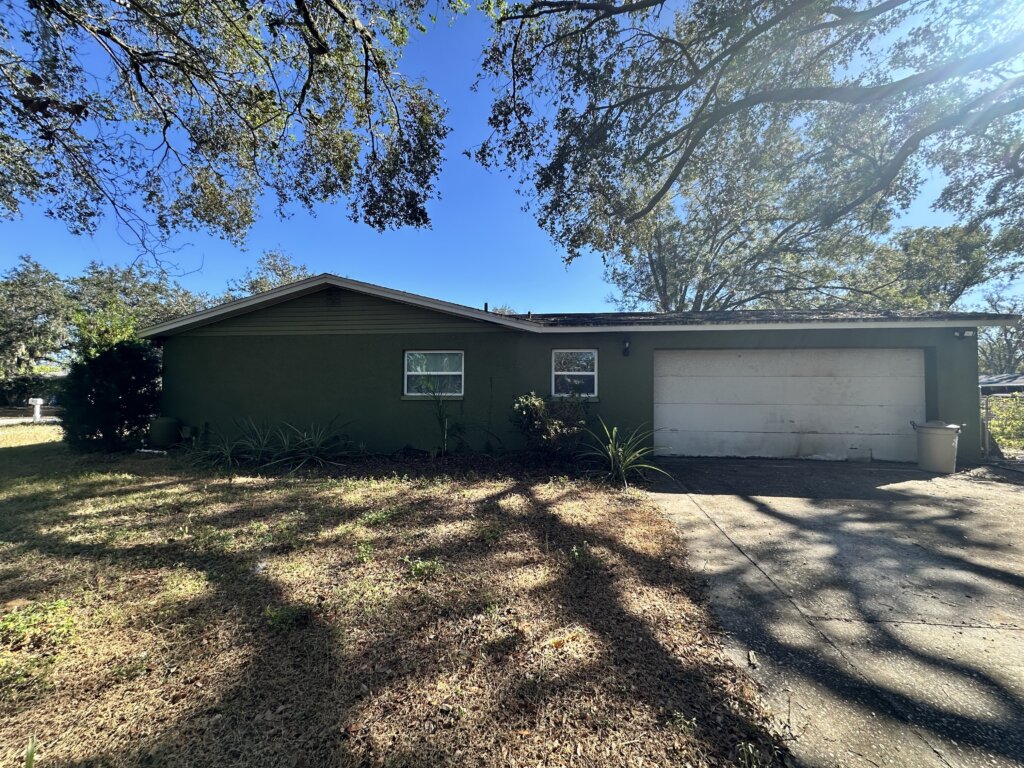
The earliest I’ve ever been brought into a foreclosure was a family in Brandon who had missed exactly two payments. The husband had lost his job and his wife was sick and unable to work. They could see where things were heading and they got ahead of it.
Their house needed a roof, the kitchen was badly outdated, and the floors were beat up. But they had substantial equity — and that changed everything. I was able to buy it below market value, and they still walked away from closing with cash in their pockets. I also gave them a two-week post-occupancy period with a 20% escrow holdback so they had money and time to relocate, which they were grateful for.
They didn’t stop the foreclosure by fighting it. They stopped it by selling before it ever became a crisis, on their terms, with equity intact.
What Happens If You Wait Too Long to Act
Here’s the other end of the spectrum.
A woman contacted me after her sister died. She was next of kin and named on the death certificate as the person responsible for handling things. She hadn’t started probate — and she had no idea her sister hadn’t paid the mortgage in over a year, or the HOA dues either.
All the mail was going to the house. She hadn’t been visiting since her sister passed. So the foreclosure had been moving forward the entire time without her knowing. She hadn’t hired an attorney or anyone else to help.
I tried to buy it. She had no money to fund probate, so I offered to pay for it myself and get reimbursed at closing. She signed a contract and I sent it to my title company.
Then the title work came back. There were two additional mortgages on the property. The first mortgage that was foreclosing named nine of her family members as defendants — so we had to run judgment searches on all nine. Three judgments came back.
Between three judgments, two additional mortgages, and the foreclosing first, the numbers didn’t work. There was no price I could pay that would satisfy everything owed. I couldn’t buy it.
The house went to foreclosure about a month after we spoke.
Nothing about that outcome was inevitable. If she’d known a year earlier, there were options. By the time she found out, there weren’t.
What Actually Stops a Foreclosure
Of every deal I’ve been involved in, the thing that consistently stopped the foreclosure was selling the property.
If I can pay cash, I can close in about two weeks — sometimes ten days once title work is done. Going to market takes longer, typically 30 to 90 days depending on the property and how quickly a buyer shows up. On the solar lien deal I handled, we went from contract to closing in 45 days, and it only took that long because I had to negotiate a $25,000 solar lien down before we could close.
Other options exist and they’re worth pursuing first if they’re available to you:
Reinstatement. Paying the past-due amount plus fees to bring the loan current. Fastest option if you can access the money.
Loan modification. Restructuring the loan with your lender. Worth asking for, though it takes time and approval isn’t guaranteed.
Forbearance. A temporary pause or reduction in payments. Useful if the hardship is genuinely temporary.
Selling. Either to a cash buyer or on the open market, depending on condition and timing.
Short sale. If you owe more than the property is worth and the lender agrees to accept less.
Bankruptcy. Filing triggers an automatic stay that halts the sale. This is an attorney conversation, not a casual option.
Can You Refinance to Stop a Foreclosure?
This is one of the four questions people search most, and the honest answer is usually no.
By the time foreclosure is underway, the missed payments are on your credit and a lis pendens has typically been recorded against the property. Those are exactly the conditions that make lenders decline refinance applications. If you were able to qualify for a refinance, you likely wouldn’t be in default in the first place.
It’s worth a call to your lender. Just don’t build your plan around it.
What Can Halt a Foreclosure at the Last Minute?
This is where most articles stop being useful, so here’s what I’ve actually seen.
Auctions get cancelled constantly. I’d estimate 60 to 70 percent of the sales scheduled for any given auction day end up cancelling. That number surprises people. A sale date on the calendar is not the end.
Lenders will absolutely cooperate once a sale date is set — if you show them money. If you can prove you’re going to pay them off in full, and they’re looking at a signed contract from a cash buyer, they’d rather take the payoff than take the house. Foreclosing on a property costs them time and money too.
You can close days before the auction. I’ve done it. With an attorney involved, sales can be cancelled or postponed to accommodate a closing.
And in Florida, there’s a window after the sale. Under Florida law there’s a short period — generally 10 days after the sale — during which objections can be filed with the court. If you can produce a contract from a ready, willing and able buyer within that window and you have an attorney file properly, it’s possible to stop and reverse the sale. We’ve done this on a number of occasions over the years.
That last one is genuinely not widely known, and it means the auction is not always the finish line. But it requires an attorney and it requires moving immediately. Do not plan on it as your strategy — treat it as a last resort that sometimes works.
How Much Equity Do You Need to Sell Before Foreclosure?
Here’s the thing I most want people to understand.
Every foreclosure I have not been able to save failed because of equity, not because of the calendar. Time is almost never the problem — if you’re selling to a cash buyer, ten days is enough.
The pattern is consistent: someone bought in the last three or four years, put little or nothing down, then lost a job. Now they owe roughly what the house is worth. I can’t pay cash in that situation, because there’s no room between the payoff and the value for a purchase to make sense.
And listing it usually doesn’t help either. Between commissions, closing costs, and any concessions, selling on the open market typically costs 7 to 10 percent of the sale price. So you need at least 10 percent equity for a traditional sale to work without you bringing money to closing.
Below that, you’re looking at a short sale, a modification, or handing the property back. Those are real options, but they’re different conversations.
Should You Sell, List, or Keep It?
I’m both a cash buyer and a licensed agent, which means I can look at this either way. Here’s how I actually decide:
Sell to a cash buyer when the house needs 4-point repairs — a roof, HVAC, plumbing, electrical — and you have enough equity. If it won’t pass a 4-point inspection, a financed buyer can’t get insurance, which means they can’t buy it. That eliminates most of the market.
List it on the open market when the house is in good condition, will pass a 4-point inspection, and you have equity. You’ll net more than any cash offer, and if you have enough runway before the sale date, it’s the better financial outcome.
Don’t sell at all when the house is in good shape and the numbers support keeping it. About a month ago a gentleman called me. I asked what his payment was including taxes and insurance, then looked up rents in his area. Rents were running roughly $200 a month above his total payment, and his house was in great condition. He didn’t have much equity. So I told him the best move — if a loan modification wasn’t available — was to rent the property out rather than sell it to me.
That’s not the answer a cash buyer is supposed to give. It was the right one.
How Do Foreclosure Surplus Funds Work In Florida?
If a property sells at auction for more than what’s owed, surplus funds exist and the former owner may be entitled to them. This is real, and a lot of people never claim what they’re owed.
The process isn’t automatic. Subordinate lienholders — second mortgages, judgment holders, HOA liens — can file claims against the surplus, and they generally get paid before the former homeowner. Whatever remains after those claims can go to the prior owner, but it requires filing a claim with the court within the statutory deadline. An attorney is worth having for this.
I’ve had sellers tell me they’d rather let it go to auction and chase surplus funds than take my cash offer. That’s a legitimate calculation and sometimes they’re right about the money. But I always point out the other half: you’re still taking a foreclosure on your credit. Is the difference worth that? Sometimes yes. Often not.
What to Do if Your Foreclosure Sale Date is 45 Days Away
If someone called me today with an auction 45 days out, this is the order I’d work through:
1. Can you get current? Any way at all — savings, family, a friend. Reinstating is the cleanest outcome and it ends the problem entirely.
2. Call your lender. Ask specifically about a loan modification or forbearance. Get the name of who you spoke to and write down what they said.
3. Find out exactly what you owe. Not an estimate — a payoff statement. Everything downstream depends on this number.
4. Compare your real options. If the payoff is low enough that a cash purchase covers it, that’s a guaranteed close. If you have real equity and enough time, listing may net you more.
With only 45 days, going to market and hoping a cash buyer appears is risky. I’d generally rather take the sure thing.
Why the Highest Offer Isn’t Always the Best Offer
This is the most important thing in this article.
When homeowners in foreclosure get multiple offers, they almost always take the highest one. In this situation, that’s the wrong instinct — because the higher offer isn’t offering certainty, and certainty is what you’re actually buying.
A cash offer with a 14-day inspection contingency does you no good with an auction date approaching. The buyer can walk on day 13 and you’ve burned two weeks you didn’t have.
What you want instead:
- No inspection contingency
- A large, non-refundable deposit
- A firm, fast closing date
The deposit is the tell. Stay away from buyers offering $500 — they have nothing at risk and they’ll walk without a second thought. Look for a minimum of $5,000, and ask whether they’ll do $10,000. Most buyers won’t walk away from that kind of money, so a big deposit tells you they’re serious and they intend to close.
Those are the terms we offer when we commit to a property, specifically so sellers know we’re real.
Ask any buyer competing for your house: what’s your deposit, is it non-refundable, and are you waiving inspection? Their answer tells you more than their price does.
If You’re Facing Foreclosure in Tampa Bay
If there’s a sale date on your calendar, or you can see one coming, the worst thing you can do is wait and hope. Options shrink as the date gets closer, and the woman whose sister died found that out the hard way.
I buy houses for cash across Tampa Bay and can close in as little as ten days. I’m also a licensed agent, so if listing your home would net you more — or if keeping it makes more sense than selling — I’ll tell you that instead. I’ve done exactly that more than once.
Either way, you’ll know where you actually stand.
Mike Youngblood A+ Home Buyers Tampa, FL (813) 200-7665
Again: this is general information from deals I’ve handled, not legal advice. Florida foreclosure involves strict court deadlines. Talk to a foreclosure attorney about your specific situation.