
A few months ago I sat down with a homeowner in Pinellas County who was staring at a foreclosure auction date. What we found buried in the title work is something I’ve since learned catches a lot of Florida sellers off guard and it nearly cost him everything he had left in the house.
When you’re facing a situation like this, understanding How Much Does It Cost to Sell a House becomes especially important because liens, closing costs, mortgage payoffs, and other expenses can dramatically change what you actually walk away with.
A Pinellas County Foreclosure With 30 Days Until Auction
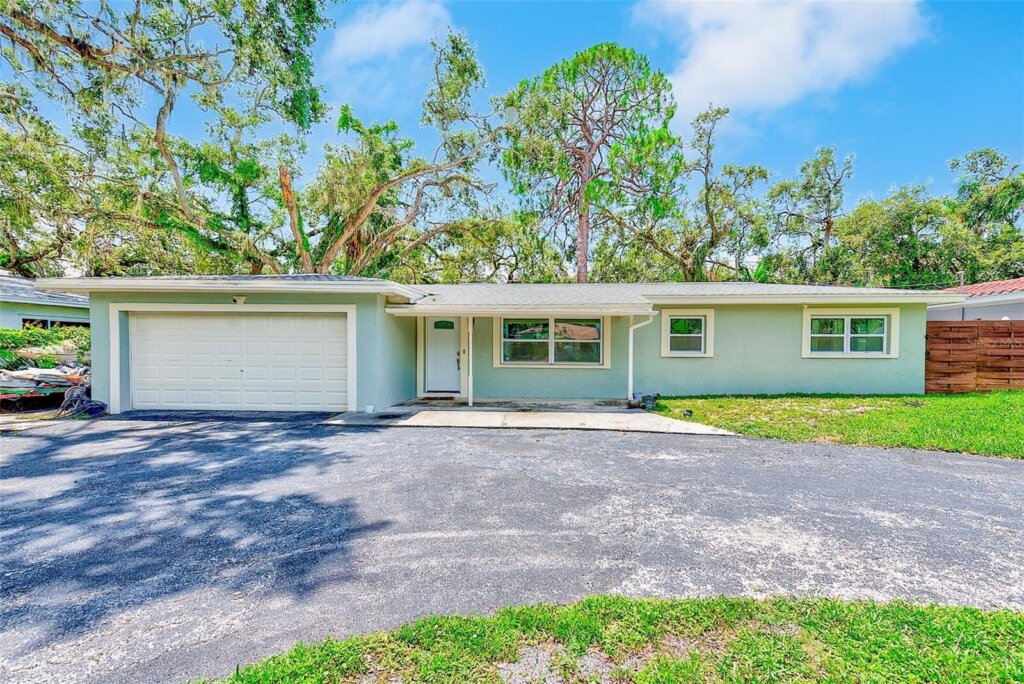
The seller’s home was in foreclosure with an auction date on the calendar. Inside, the house was genuinely nice. They’d remodeled when they bought it and it had been well maintained. This wasn’t a distressed property in the physical sense — it was a distressed situation.
We got the house under contract roughly thirty days before the auction date. On paper it was a clean save: sell before the auction, pay off the mortgage, walk away with something instead of losing the house and his equity to the courthouse steps.
After the payoff and closing costs, he was on track to walk with about $20,000.
A $25,000 Solar Lien the Seller Didn’t Know About
The house had solar panels on the roof. The seller believed they were paid for and included with the home.
They weren’t. There was a $25,000 lien attached to the property for the solar system.
Do the math on that and the problem is obvious. He was set to receive about $20,000 at closing. Paying off a $25,000 solar lien meant he wouldn’t walk away with anything — he’d have to bring roughly $5,000 of his own money to the closing table just to complete a sale that was already saving him from foreclosure.
For a seller in that position, $5,000 might as well be $500,000. It wasn’t happening.
What a Solar Lien Actually Is
This is worth understanding, because the seller genuinely didn’t know it existed and most homeowners with financed solar don’t either.
When solar panels are financed rather than bought outright, the solar company typically files a UCC-1 fixture filing. That’s a public notice recorded against the property announcing that the lender has a security interest in equipment attached to the home. Because it attaches to the real property, it shows up in a title search and clouds title until it’s resolved.
Not all solar arrangements work the same way:
Cash purchase — the panels are owned outright, no lien, no issue at sale.
Solar loan — the most common source of trouble. The loan is secured by a UCC-1 fixture filing against the house.
Lease or Power Purchase Agreement (PPA) — the homeowner doesn’t own the panels at all. They’re paying for the equipment or the power it produces. At sale, the buyer generally has to qualify and agree to assume the agreement.
In practice, when a UCC-1 shows up in title work, there are three ways forward: the seller pays off or buys out the system, the buyer assumes the loan or lease with the solar company’s approval, or the system gets removed. Most mortgage lenders won’t close on a property with an unresolved lien, so ignoring it isn’t an option. Once it’s satisfied, the solar company has to file a UCC-3 termination to formally release it.
If you’re not sure whether you have one, it will surface in a title search. In Florida, fixture filings are recorded in the county’s official records, and UCC filings are searchable through the Florida Secured Transaction Registry.
Do Solar Liens Get Wiped Out in a Foreclosure
Here’s where the foreclosure changed everything.
In a foreclosure of a first mortgage, subordinate liens — second mortgages, judgments, and yes, solar fixture filings — generally lose their claim against the property. The senior lienholder forecloses, junior lienholders get joined in the action, and their security interest in the house is extinguished. If there’s surplus money after the first mortgage is paid, junior lienholders may claim against that, but on a property where the mortgage consumes most of the value, there often isn’t one.
Translated: if this house went to auction, the solar lender stood a very good chance of collecting nothing on their $25,000.
With the seller’s written approval, I got in touch with the solar company’s lender directly and laid that out. Not as a threat — as arithmetic. They could work with us on a payoff now, or they could take their chances at a foreclosure sale where their lien likely gets wiped and they collect zero.
How To Negotiate a Solar Lien Payoff
This is the part that surprised me, and it’s the reason I’m writing this post: solar lien payoffs are negotiable, and they negotiate a lot like a house.
We opened at $1,000 to satisfy the lien. Deliberately low, the way you’d open on a property.
They countered, and it was a substantial move down from $25,000 right out of the gate. We countered again. Back and forth over roughly two weeks, the same rhythm as any real estate negotiation.
We ended up settling at approximately 60% off the original lien amount.
Closing Before the Foreclosure Auction Date
With the reduced payoff, the deal worked. We closed on time, before the auction date.
The seller avoided a foreclosure on his credit, the sale went through, and instead of bringing $5,000 to the table, he walked away from closing with money in his pocket.
What Florida Homeowners Should Know About Solar Liens
A few things I’d want any Florida homeowner or agent to know:
Solar companies will negotiate. I assumed a lien was a lien and the number was the number. It isn’t. Especially when the alternative is a foreclosure that wipes their security interest entirely.
Leverage comes from the alternative. The negotiation worked because I could explain, concretely, what the lender’s outcome looked like if the deal fell through. That’s true in a foreclosure situation and much less true in a normal sale.
Treat it like a property negotiation. Open low, expect a big first counter, plan on multiple rounds, and don’t accept the first number.
Start early. A negotiated solar buyout commonly takes several weeks, and the UCC-3 termination has to be coordinated with the title company before closing. We had about thirty days and used nearly all of it. On a tighter timeline this deal does not close.
Find out before you list. The seller had no idea the lien existed. If it had turned up two days before closing instead of thirty days out, there would have been no time to negotiate anything.
One honest caveat: extinguishing a lien against the property doesn’t always eliminate the underlying personal obligation on the loan, and every situation has its own facts. This is what worked on this file, not legal advice — talk to a real estate attorney about your specific circumstances.
Selling a House With Solar Panels in Florida
If you’re facing a foreclosure in Pinellas or Hillsborough County and you have solar panels on the house, find out what’s actually recorded against your property before you do anything else. Pull the title work early. If there’s a UCC-1 fixture filing on it, that number is very likely negotiable — and if there’s a foreclosure in the picture, you have more leverage than you think.
I’m both an active cash buyer and a licensed agent, which means I can look at a situation like this from either direction and tell you honestly which path nets you more. In this case listing the house and negotiating the lien was clearly the right move, and I said so.
If you’ve got a property with a solar lien, a foreclosure timeline, or both, I’m happy to take a look and tell you what I see. No cost, no obligation.
If you’re earlier in the process and still weighing your options, here’s the full breakdown of how to stop a foreclosure in Florida.
Mike Youngblood
A+ Home Buyers
Tampa, FL
(813) 200-7665