
A few months ago I bought a house in Zephyrhills from a woman who hadn’t seen it in years.
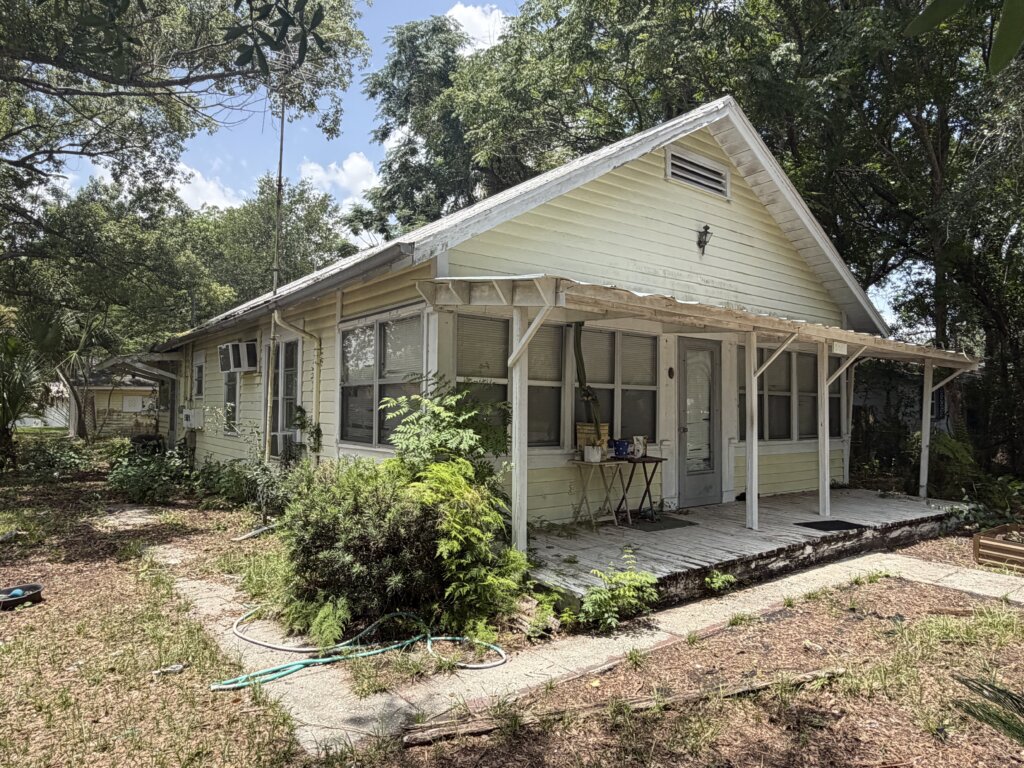
She’d bought the place about fourteen years earlier, planning to live in it. It’s a bungalow — close to a hundred years old, small, on a good lot in a neighborhood of similar houses. Then her job moved her out of state. Rather than sell, she did what a lot of people do: she put a tenant in it and kept it, becoming a long-distance landlord more or less by accident.
When she first contacted me, she thought she had a house in decent shape. Her tenant was preparing to move out, and she wanted to sell so she could put the money toward buying a home where she lives now. She was upfront that she hadn’t laid eyes on the property in a long time, and that as far as she knew the only real problem was the AC — the compressor had quit at some point and the house was running on window units.
She asked $100,000, and said she’d take $95,000 for a cash offer.
Then her mother went to the house.
What $50,000 in Tenant Damage Actually Looks Like
She’d mailed a key to her mother, who lives nearby, to put in a lockbox for me. Her mother let herself in first and called her daughter from inside.
The tenant had destroyed it.
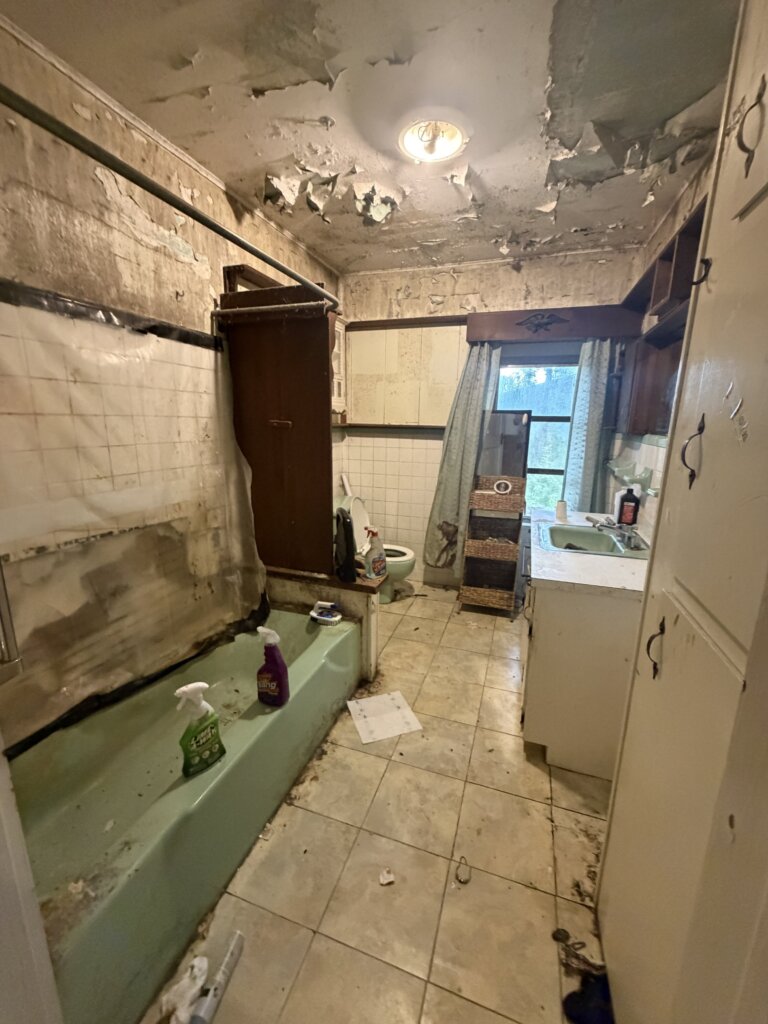
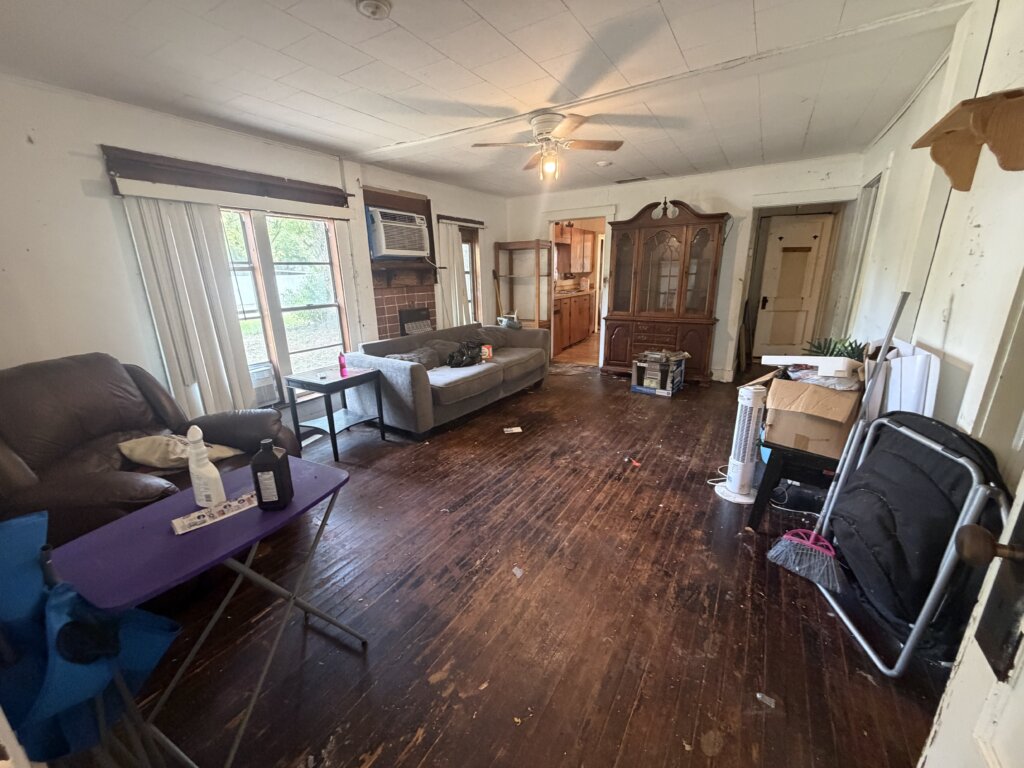
I went out the next day and it was exactly as described. Holes punched in the drywall. Rat droppings through the whole house. Termite damage. Mold. The kitchen was finished — not one cabinet worked properly and none of the appliances ran. The bathroom was gutted, and not in the good way. The original hardwood floors, which should have been the best thing about the house, were scratched to pieces. Original windows. A metal roof I couldn’t tell would pass an inspection or not. And the dead AC compressor she already knew about, though the ductwork was all still there.
The one bright spot was the electrical panel, which somebody had updated at some point. The plumbing and outlets seemed serviceable, though I couldn’t say for certain.
Everything else needed to be redone.
To her credit, when we talked after she’d seen the photos, she told me straight out that she figured I was going to lowball her and she was fine with it. She just wanted it sold. She was stressed, she was six hundred miles away, and she’d just found out the asset she’d been holding for fourteen years was in much worse shape than she thought.
Should You Repair a Damaged Rental or Sell It AS-IS?
This is the part worth slowing down on, because if you’re an out-of-state landlord who just got a phone call like hers about your own rental property, this is your decision too.
Broadly there were two directions she could go. She could put the house back together and sell it on the open market — hiring contractors from another state for a full remodel covering drywall, kitchen, bathroom, floors, probably windows, possibly the roof, plus the AC and the pest and mold work. Or she could sell it in the condition it was in and take a lower number for a faster, certain close.
Almost everybody assumes the first direction obviously nets more, because the sale price is bigger. Sometimes that’s true. Her situation was more complicated than that, and I’d rather show you the numbers than ask you to take my word for it.
The Real Cost of Repairing a Rental After Tenant Damage
Here’s the honest comparison. I’ll be straightforward that this is my estimate of what listing would have looked like — I don’t get to know for certain, because she chose the other path.
Fixed up, that house is worth about $189,000. It needs about $55,000 of work to get there. Hold those two numbers and everything else follows.
On paper she had three paths. In reality she had two, and that gap is the whole story — because the option that nets the most money is the one most people in her situation can’t actually reach.
Option 1: Renovate, Then List on the Open Market
What it requires before you start: $55,000 in cash, five or six months, and the ability to hire and supervise contractors in a state you don’t live in. You also carry every risk along the way — the rehab running over, the termite damage being worse behind the drywall, the market shifting while you’re in it.
What it pays if everything goes right:
| Sale price, renovated | $189,000 |
| Renovation | −$55,000 |
| Agent commission (6%) | −$11,300 |
| Seller’s closing costs (~1.5%) | −$2,800 |
| Holding costs, 5–6 months | −$3,500 |
| Net | ≈ $116,000 |
Those costs in commissions, concessions, and repairs that surface at inspection are what separate a listing price from what you actually keep.
That’s roughly double what she ended up with, and I’m not going to pretend otherwise.
But she didn’t have $55,000 to put into it. She was selling this house to get money for her next one — the renovation budget was the thing she didn’t have, which is why she was selling in the first place. And she was hundreds of miles away, with a full-time job, and no way to stand in that kitchen and tell a contractor he’d done it wrong.
So this path wasn’t a choice she declined. It was a door that was never open. If you’re reading this because you just got a phone call like hers, be honest with yourself about whether it’s open for you either — because comparing your real options against a hypothetical one is how people freeze for six months while the house gets worse.
Option 2: List it AS-IS Without Repairs
This is the comparison most people should actually be making, and it’s the one nobody runs.
Here’s the catch: a Florida house with no working AC, active mold, termite damage, and a bathroom that doesn’t function isn’t going to pass an appraisal. No buyer using an FHA, VA, or conventional loan can close on it. So the pool of people who can actually buy it is investors paying cash — the same pool that would have made her an offer directly.
Investors price backward from the finished value. At $189,000 fixed up with $55,000 of work, most will land somewhere in the $70,000 range. Say she got that on the MLS:
| As-is sale price | ≈ $70,000 |
| Agent commission (6%) | −$4,200 |
| Seller’s closing costs | −$1,000 |
| Holding costs, 60–90 days | −$1,500 |
| Net | ≈ $63,000 |
Option 3: Sell to a Cash Buyer
She sold to me for $60,000. I paid all closing costs. No inspection contingency and no financing contingency, so the number we agreed on was the number she got. Title work took seven days and we closed fourteen days after signing — the same process we run on every purchase. She had a small mortgage balance left and walked away with roughly $20,000.
So the two paths actually available to her landed within a few thousand dollars of each other — and one of them took two weeks instead of two or three months, with no showings, no agent, no repairs, and no chance of the deal collapsing at the last minute.
That’s the real trade, and it’s more specific than “cash buyers pay less.” The renovation path wins on money and loses on everything else — and for most people in this situation it isn’t a path at all, because the whole reason they’re selling is that they don’t have $55,000 sitting idle. Once you take that option off the table, the honest comparison is between listing as-is and selling as-is. Those two end up in nearly the same place, and one of them is done in a fortnight.
What to Do If Your Tenant Destroyed Your Rental
Get eyes on the property before you decide anything. She was about to make a decision based on a mental picture that was fourteen years out of date. If you can’t go yourself, send someone you trust and have them take photos of everything, including the ugly parts. You cannot price a house you haven’t seen.
Get a real listing opinion, not just a cash offer. Call an agent and ask two questions: what would this sell for fixed up, and what would it need to get there. Those two numbers are the whole decision. Any cash buyer worth dealing with will tell you to go get them. I tell people to do it.
Then ask yourself the honest question: can I actually fund the repairs? This is the fork in the road. If you have the renovation money sitting there and you can manage the work, renovating and listing nets you more, and you should do that — I’d tell my own family the same thing. If you’d have to borrow it, or you’re selling this house specifically because you need the money, then that path is closed to you no matter how good the math looks on paper. Compare the two options you actually have, not the three that exist in theory.
Understand what the contract terms are worth. The reason her $60,000 was really $60,000 is that there was no inspection contingency, no financing contingency, and I covered closing costs. A higher offer with escape hatches in it is not a higher offer — it’s an opening position. Ask directly whether the number can change after an inspection.
Move faster than feels comfortable. Every month a damaged, vacant rental sits empty, it gets worse — and in Florida humidity it gets worse quickly. Mold spreads, pests settle in, and the copper walks off. The house she sold me in fourteen days would have been a materially worse house in six months.
Also check whether code enforcement has opened a case. Vacant, damaged properties attract violations quickly, and those liens work differently than a payoff at closing.
Is Selling to a Cash Buyer Worth the Discount?
I bought that house for less than it will eventually be worth, and I’ll make money on it. That’s the business, and anyone who tells you otherwise is selling something.
What she bought with the difference was certainty and speed at a moment when she badly needed both, and the ability to walk away with cash for her next house instead of sinking $55,000 into this one first.
That’s a fair trade when you’re hundreds of miles away holding a house you can’t fix and can’t fund. It’s a bad trade if your house is in decent shape, or if you have the money and the time to renovate it properly. If that’s you, don’t call me — call an agent. You’ll do better, and I’d rather tell you that now than have you find out later.
If you’re in the first group, that’s what we’re for.
Mike made this an easy and seamless process. When our renters left us in the lurch and a house that no longer had its luster he was able to help us with a quick sale. Closed in two weeks, was straight forward, and gave us an offer we were happy with. Would recommend to others looking to sell quickly!
You can read more reviews from sellers we’ve worked with, including a few in situations a lot like this one.
About the author: Mike Youngblood is the owner of A+ Home Buyers, a Tampa-based company buying houses in Hillsborough, Pinellas, Pasco, and Polk counties since 2015. If you own a rental you can’t get to and don’t know what it’s worth in its current condition, he can be reached at (813) 200-7665.